Semarang, August 19–20, 2026 — Rapid advancements in digital technology, shifting tourist behavior, and an increasing demand for sustainability are reshaping the landscape of the global tourism sector. Destinations today are challenged to deliver meaningful visitor experiences, engage in relevant communication with various stakeholders, and ensure that the benefits of tourism are genuinely felt by local communities and the surrounding environment.
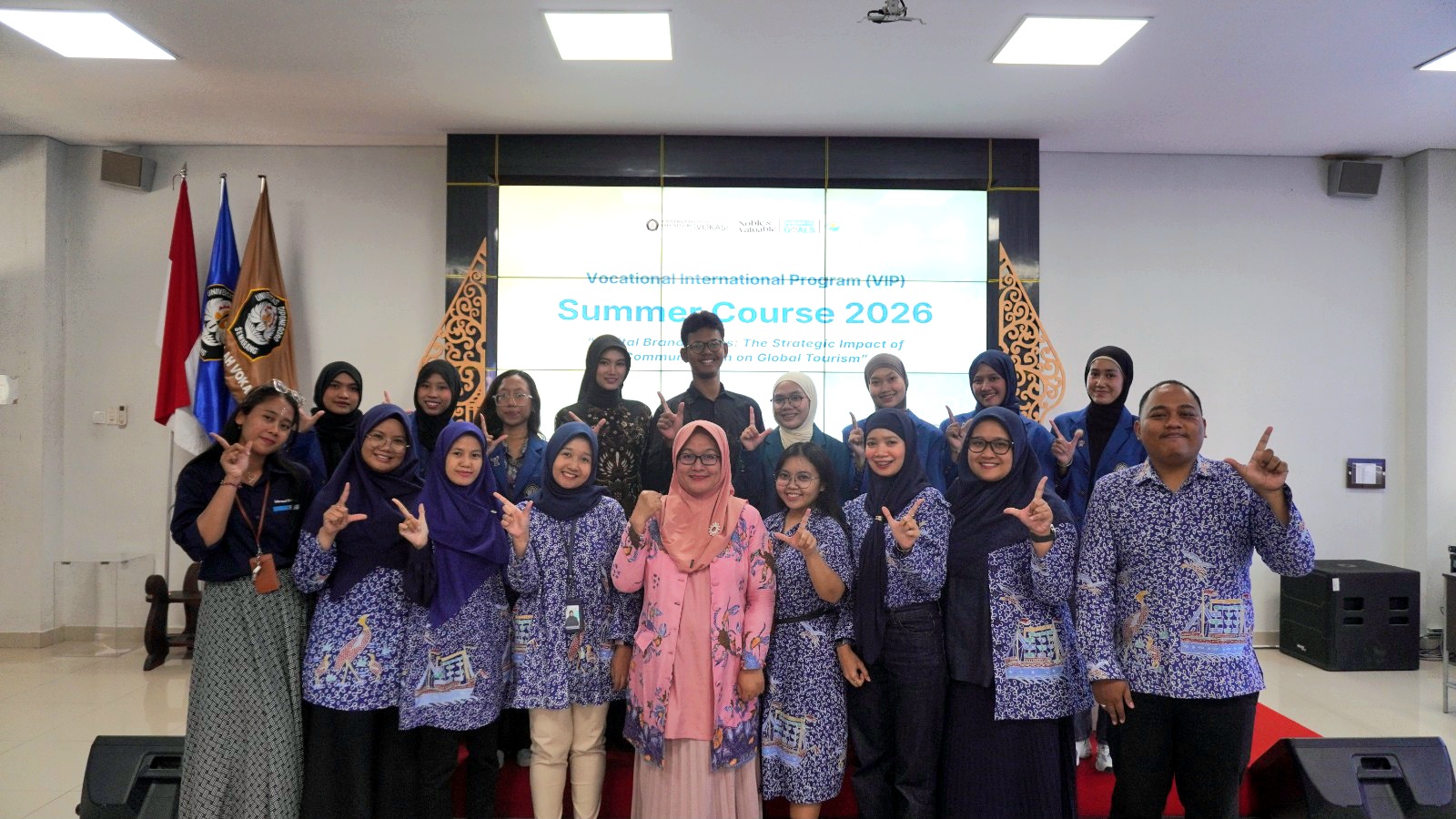
These insights took center stage at the Vocational International Program (VIP) Summer Course 2026, themed “Digital Brandscapes: The Strategic Impact of Communication on Global Tourism”. Hosted by the Department of Information and Culture at the Vocational School, Universitas Diponegoro (UNDIP), the program featured four academics who offered complementary perspectives covering digital strategy, the commercialization of sustainability narratives, the evolution of destination marketing research, and the dynamics of tourism communication on social media.
The four guest speakers were Prof. Dr. Mohd Hafiz Hanafiah, CHIA, from Universiti Teknologi MARA (UiTM); Assoc. Prof. Dr. Zuraidah Sulaiman from Universiti Teknologi Malaysia (UTM); Prof. Usep Suhud, M.Si., Ph.D., from Universitas Negeri Jakarta (UNJ); and Girindra Putri Ardana R., M.Sc., Ph.D., from Universitas Diponegoro.
In his presentation titled “Digital Strategy on Social Media for Tourism Branding”, Prof. Hafiz explained that digital technology and social media have fundamentally transformed how travelers search for information and choose destinations. However, he emphasized that digital transformation should not displace the human touch in tourism services. According to him, the efficiency driven by digital technology must go hand in hand with hospitality, warmth, and a sense of security for travelers. He also highlighted key challenges that require careful navigation, such as over-reliance on digital systems, technological disparities, and personal data protection, all of which must be managed in balance with a spirit of innovation.
Meanwhile, in her session titled “Commercializing Sustainable Tourism Narratives”, Assoc. Prof. Zuraidah noted that travelers ultimately look beyond basic facilities; they buy meaning, identity, emotion, and memories. She introduced the PLACE Framework—comprising Promise, Local Voice, Authentic Evidence, Change, and Easy Action—as an approach to translate sustainability narratives into concrete, tangible experiences for visitors. Practical applications of this framework include traditional weaving workshops and educational tours centered on mangrove ecosystems, which simultaneously deliver real economic benefits to local communities and environmental conservation.
Prof. Usep Suhud outlined the evolving direction of destination marketing research. While early research primarily focused on tourist motivation, it has now expanded to encompass regional identity, governance, cultural aspects, and sustainability. He cited studies on geothermal and geopark tourism, which position volcanic attractions not merely as standalone tourist sites, but as part of an integrated destination system tied to governance and sustainable development.
In her presentation titled “Selling Places, Creating Experiences: Language and Discourse in Tourism Social Media”, Girindra Putri Ardana R. highlighted the shift in tourism communication from one-way promotion to interactive dialogues involving travelers, local communities, and influencers. She explained that user-generated content (UGC) and electronic word-of-mouth (eWOM) are now often perceived as more trustworthy than official marketing efforts. This dynamic, she noted, creates a tension between “staged authenticity” and genuinely authentic travel experiences.
Collectively, these four presentations underscore that the future of tourism is not solely defined by the extent of digitalization, but rather by how technology, storytelling, and communication are harnessed to deliver experiences that are human-centric, authentic, inclusive, and sustainable—preserving the vital connection among travelers, communities, culture, and the environment.
Through the organization of this VIP Summer Course, the Vocational School of UNDIP continues to reinforce the internationalization of vocational education while equipping future tourism professionals with the ability to seamlessly blend digital innovation, human connection, local identity, and sustainable principles.